Your flight is cancelled. The airline’s app crashes. The person in front of you at the desk is shouting, and the queue behind you is getting longer.
In that moment almost everyone does the same thing: they spend their energy on the cancelled flight. They replay it, rage at it and rehearse what they’ll say to the airline. None of that gets them home a minute sooner.
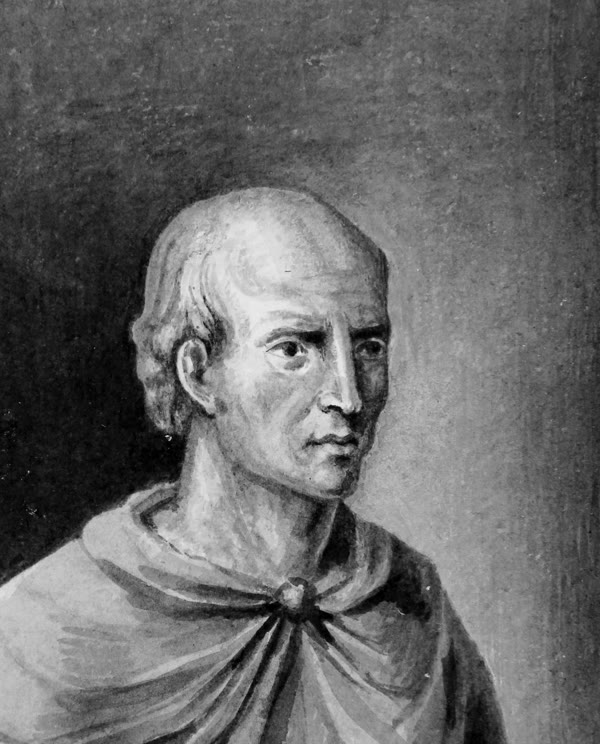
Epictetus, a former slave who became one of the greatest teachers in Rome, built his whole philosophy on noticing that mistake. He called the cure the first lesson of all, and today we call it the dichotomy of control. Here is what he actually said, what most summaries get wrong, and a free worksheet to put it to work.
What Epictetus actually said
The Enchiridion, the short handbook of Epictetus’ teaching compiled by his student Arrian, opens with this line:
“Of things some are in our power, and others are not.”
Epictetus, Enchiridion 1 (George Long translation)
That’s the dichotomy: a division into two. Everything that happens to you belongs on one side or the other. But Epictetus doesn’t leave it vague. He immediately says exactly what goes on each side.
The list most people skip
“In our power are opinion, movement towards a thing, desire, aversion, turning from a thing; and in a word, whatever are our acts. Not in our power are the body, property, reputation, offices, and in a word, whatever are not our own acts.”
Enchiridion 1 (Long translation; his bracketed Greek terms and glosses omitted)
Read that list slowly, because it’s stricter than most people expect.
- Up to you: your judgments (“opinion”), what you move towards and away from, what you want and what you reject. In short, your own choices and how you respond.
- Not up to you: your body, your property, your reputation, your job title. Even your health and your money are on the second list.
That’s the part modern summaries soften. Epictetus isn’t saying “focus on what you can change, like your career.” He’s saying your career, your savings and even your own body can be taken from you by illness, accident or other people. The only things that are fully yours are your judgments and your choices.
Why it matters: the promise in the next lines
Why draw the line so tightly? Because of what Epictetus promises to the person who gets it right:
“If you think that only which is your own to be your own, and if you think that what is another’s, as it really is, belongs to another, no man will ever compel you, no man will hinder you, you will never blame any man, you will accuse no man, you will do nothing involuntarily, no man will harm you, you will have no enemy, for you will not suffer any harm.”
Enchiridion 1 (Long translation; his bracketed Greek terms and glosses omitted)
And the opposite, for the person who mixes the two lists up: “you will be hindered, you will lament, you will be disturbed, you will blame both gods and men.”
That second sentence is a pretty good description of a bad day. Almost every frustration comes from treating something on the second list as if it belonged on the first: the traffic, the reply that hasn’t come, the review you didn’t get, the body that’s ageing. You can’t win a fight with something that was never yours to command.
The test Epictetus gives you
The dichotomy isn’t meant to stay a nice idea. Still in the first chapter, Epictetus turns it into a habit you practise:
“Straightway then practise saying to every harsh appearance: You are an appearance, and in no manner what you appear to be. Then examine it by the rules which you possess, and by this first and chiefly, whether it relates to the things which are in our power or to things which are not in our power; and if it relates to anything which is not in our power, be ready to say that it does not concern you.”
Enchiridion 1 (Long translation; his bracketed Greek terms and glosses omitted)
Three steps are packed in there:
- Pause. When something hits you hard, label it: “this is an impression,” not yet the truth.
- Sort it. Ask the first question: is this about something in my power, or not?
- Let go of what isn’t yours. If it’s not in your power, “be ready to say that it does not concern you.” That doesn’t mean you stop caring. It means it stops running you.
This connects straight to the most quoted line in the book, a few chapters later:
“Men are disturbed not by the things which happen, but by the opinions about the things.”
Enchiridion 5
Your opinion is on the first list. That’s the hopeful part: the thing that actually disturbs you is the one thing you can work on.
Watch: the dichotomy of control in 5 minutes
Three examples from ordinary life
The job interview
Not up to you: whether they hire you, who else applied, the interviewer’s mood. Up to you: how well you prepare, how honestly you answer, how you treat the outcome. Put all your effort into the first list and your peace of mind stops depending on a stranger’s decision.
The argument with your partner
Not up to you: what they feel, what they say, whether they apologise. Up to you: whether you listen, what you say next, whether you raise your voice. You can’t make someone calm, but you can refuse to add fuel.
The diagnosis
Not up to you: the illness itself; Epictetus puts the body firmly on the second list. Up to you: following treatment, how you spend the days you have, how you treat the people around you. Epictetus himself was lame for most of his life; elsewhere in the Enchiridion he writes that “lameness is an impediment to the leg, but not to the will” (9).
What the dichotomy of control does not mean
It isn’t passivity. Epictetus doesn’t tell you to stop trying. Your effort, your preparation and your actions are all on the first list. The point is to put all your energy there instead of wasting it on outcomes.
It isn’t “don’t care.” You can love your family, want the job and hope for good health. What changes is that your peace no longer hangs on getting them. Epictetus’ own image: “Seek not that the things which happen should happen as you wish; but wish the things which happen to be as they are, and you will have a tranquil flow of life” (Enchiridion 8).
The “trichotomy” is modern, not ancient. Some writers today, notably William Irvine in A Guide to the Good Life, add a third category for things you partly control, such as winning a tennis match. That can be a useful teaching tool, but it isn’t in Epictetus. His answer to “partly” is to split it: your training and effort are in your power; the score is not.
A two-minute daily practice
Epictetus says to practise the test “straightway,” on every harsh impression, which means it works best as a habit, not an emergency tool. Here is a simple routine built from Enchiridion 1:
- Morning (one minute). Look at the day ahead and name one thing that is likely to annoy you: a meeting, a commute, a difficult person. Say to yourself which part of it is in your power and which isn’t. You’ve sorted it before it arrives.
- In the moment. When something stings, use Epictetus’ words as a script: “You are an appearance.” Then ask the one question: in my power, or not?
- Evening (one minute). Recall one moment when you fought something that wasn’t yours to control. No self-blame, just notice it. Seneca recommended exactly this kind of nightly review, and it’s how the sorting becomes automatic.
After a few weeks you’ll notice the pause getting shorter. That pause is the whole skill.
Free printable: the Dichotomy of Control worksheet
The worksheet walks you through Epictetus’ three steps on paper: write down what’s bothering you, sort every part of it into two columns, then choose one action from the “up to me” side. Print it, keep a few by your desk, and fill one in whenever something won’t leave your head.
If you like working on paper, pair it with the five-question fear audit from Seneca’s Letter 13, and read more about Epictetus’ life on our philosophers page.
Frequently asked questions
What is the dichotomy of control?
It’s the Stoic principle, from the first line of Epictetus’ Enchiridion, that some things are in our power and others are not. In our power are our judgments, desires, aversions and choices; not in our power are the body, property, reputation and office. Peace comes from caring about the first and accepting the second.
Who came up with the dichotomy of control?
The idea is Stoic, but its clearest statement comes from Epictetus (c. AD 50 – c. 135), recorded by his student Arrian in the Enchiridion and the Discourses. The phrase “dichotomy of control” itself is a modern label.
Is my health in my control, according to Epictetus?
No. He lists “the body” among the things not in our power. Your choices about exercise, food and treatment are in your power; whether you get ill is not.
What is the trichotomy of control?
A modern variation by William Irvine that adds a middle category for things we partly control. It isn’t in the ancient texts; Epictetus would split such cases into the part that’s your choice and the part that isn’t.
Where can I read the Enchiridion for free?
George Long’s public-domain translation is free on Project Gutenberg. The whole Enchiridion takes under an hour to read.
Epic Stoic publishes one deep-dive on Stoic philosophy every week: the original texts, what they meant, and how to use them. Watch the short versions on our YouTube channel.
Recommended reading
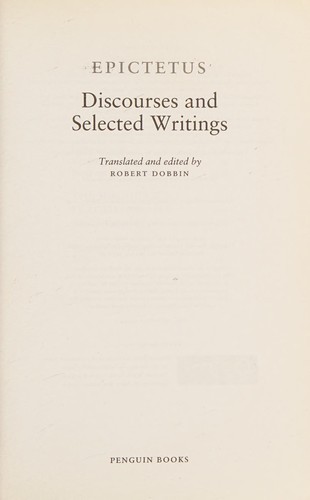
Discourses and Selected Writings
Epictetus, translated by Robert Dobbin
The teaching of the former slave who became Stoicism’s sharpest teacher, including the famous Enchiridion (Handbook).
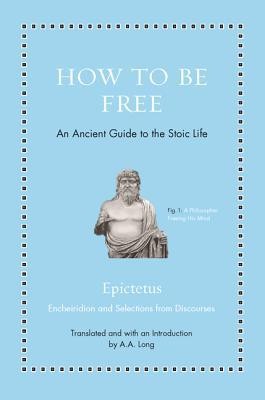
How to Be Free
Epictetus, translated by A. A. Long
The Enchiridion with the Greek facing the English, from one of the great scholars of Stoicism. A gift-worthy edition.
As an Amazon Associate we earn from qualifying purchases. More picks on our Books page.
