

You spent three weeks on a plan for the quarter. On Monday morning a client pulls out, a colleague goes on sick leave and the budget you were promised is cut in half. By lunch the plan is useless.
Some people spend the rest of the week defending it anyway. They argue that it should still work, they blame whoever broke it, and they keep pushing the old shape into a situation that no longer fits. Others put the plan down, look at what is actually in front of them and start again.
Bruce Lee built a whole approach to fighting around the second response. The Stoics, nearly two thousand years earlier, built a whole approach to living around it. Put the two side by side and you get a clear picture of what adapting really means, and what it does not.
Bruce Lee and the problem of the fixed style
Bruce Lee trained first in Wing Chun in Hong Kong, then taught in the United States. Over time he grew frustrated with martial arts schools that taught set patterns as if a real fight would wait politely for them. A student could spend years perfecting a classical form and still freeze when an opponent did something the form had not planned for.
His answer was Jeet Kune Do, which he described less as a new style than as a way of moving past styles. The ideas collected after his death in Tao of Jeet Kune Do (1975) return to the same theme again and again: keep what works, drop what does not, and do not let a method become a cage. The fighter should respond to the actual opponent, not to an imagined one.
In his 1971 television interview with Pierre Berton, Lee explained this with an image of water. Water poured into a cup becomes the cup; poured into a bottle, it becomes the bottle. It can flow gently or it can crash. He ended the thought with a line that has followed him ever since:
“Be water, my friend.”
Bruce Lee, interview with Pierre Berton, The Pierre Berton Show (December 1971)
Notice what the image says and what it does not. Water changes its shape, but it does not stop being water. It adapts to the container without giving up what it is. That distinction is exactly where Stoicism has something to add.
What the Stoics meant by adapting
Epictetus, the former slave who taught philosophy in Nicopolis, gave his students a rule that sounds almost like Lee’s water:
“Seek not that the things which happen should happen as you wish; but wish the things which happen to be as they are, and you will have a tranquil flow of life.”
Epictetus, Enchiridion 8 (George Long translation)
“A tranquil flow of life” is a fair description of water finding its way around a rock. But Epictetus is not telling you to stop caring or stop acting. His point is about where the fight takes place. The client who left, the cut budget, the sick colleague: those have already happened. Arguing with them is like a fighter arguing with the punch that has already landed. The useful move is to accept the new position and work from there.
Why do we find that so hard? Epictetus explains that too:
“Men are disturbed not by the things which happen, but by the opinions about the things.”
Epictetus, Enchiridion 5 (George Long translation)
A rigid plan is an opinion that has hardened. We decide in advance that things must go a certain way, and then we treat every change as an injury. The Stoic habit is to hold plans firmly enough to act on them and loosely enough to put them down.
Flexible about methods, firm about character
Here is the part that both Lee and the Stoics insist on, and which most summaries skip. Adapting does not mean having no centre. Marcus Aurelius, writing in his private notebook, used a water image of his own, but from the other side:
“Be like the promontory against which the waves continually break, but it stands firm and tames the fury of the water around it.”
Marcus Aurelius, Meditations 4.49 (George Long translation)
Lee says be water; Marcus says be the rock. They are not contradicting each other. They are describing two layers of the same person. Your tactics, plans and habits should be fluid. Your values, your honesty, your effort and your fairness to others should be the rock. A fighter switches technique a dozen times in a round, but never stops trying. A Stoic changes plans as often as the world requires, but never trades away good character to get a result.

A common misreading: “be water” as “go with the flow”
The phrase “be water” is often used to mean something like “relax, don’t resist anything, let life carry you.” That is close to the opposite of what Lee practised. He trained with an intensity that is still legendary. Water in his image was not passive; it could also crash.
The same mistake is made with Stoicism. People hear “accept what you cannot control” and assume it means giving up, staying quiet or tolerating anything. Epictetus asked you to accept what has already happened and what is not in your power. He did not ask you to stop acting on what is. Accepting that the budget has been cut is Stoic. Refusing to rebuild the plan because “nothing is in my control” is not.
There is a second misreading in the other direction: treating flexibility as having no principles. If you adapt so completely that you will say or do anything the situation rewards, you have not become water. You have just disappeared. The promontory matters as much as the river.
Practice: the water and rock review
This short exercise works well at the end of a day when a plan fell apart, or before a meeting where you expect things to change. It takes about ten minutes with a notebook.
- Write down what changed. One or two plain sentences, as a neutral observer would put it. “The client cancelled the contract.” Not “the client betrayed us.”
- Separate the event from your opinion about it. Under the first line, write the story you have been telling yourself. Read Epictetus’ line again and ask which part is actually disturbing you: the event, or the opinion.
- List your water. What methods, plans, routines or expectations could change? Write at least three alternatives, even if some seem unlikely.
- List your rock. What will you not give up, whatever happens? Keep this short: perhaps honesty with the team, doing careful work, treating the client fairly.
- Choose one next action. Pick one item from the water list that fits within the rock list, and do it within twenty-four hours.
- Review after a week. Did the new approach work? If not, adapt again. The aim is not to find the perfect plan; it is to stay responsive.
After a few rounds you will notice that the rock list barely changes, while the water list is different almost every time. That is the right way round.
Where this shows up in ordinary life
You do not need to be a fighter or an emperor to use this. A parent whose child falls ill on the morning of an important trip, a student whose exam date moves, a runner who gets injured in the weeks before a race: each faces the same choice. They can hold on to the plan and suffer over it, or they can keep their aim and change their route.
The runner who cannot run might switch to swimming and keep their fitness. The aim, staying healthy and strong, has not changed. Only the method has. That is the Stoic and the Jeet Kune Do lesson in one ordinary decision.
Closing thought
Bruce Lee wanted fighters who answered the real opponent rather than the one in their textbook. Epictetus and Marcus wanted people who answered the real day rather than the one in their plans. Both asked for the same two things: flow with what happens, and stay solid in who you are.
Next time your plan breaks, try asking two questions before anything else. What here is water? And what here is rock?
Recommended reading
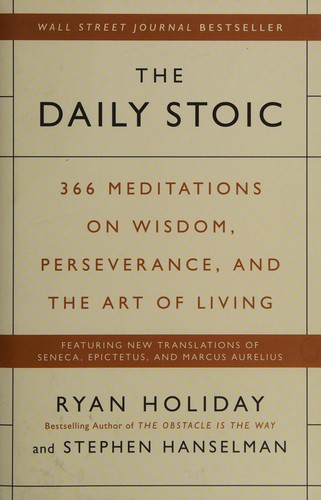
The Daily Stoic
Ryan Holiday and Stephen Hanselman
366 short readings, one per day, each a Stoic passage with a modern reflection. The easiest daily habit to start.
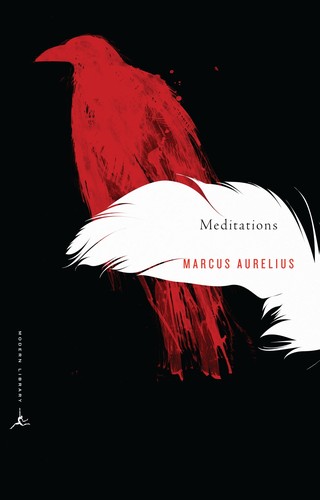
Meditations
Marcus Aurelius, translated by Gregory Hays
The private notebook of a Roman emperor. Short entries you can open anywhere; the most readable modern translation.
As an Amazon Associate we earn from qualifying purchases. More picks on our Books page.
