

It is 11 p.m. You are lying in bed scrolling, and somewhere between two videos your mind drifts back to the meeting this afternoon. The comment you made that came out sharper than you meant. The email you still haven’t answered. You feel a small knot of regret, then pick the phone back up, and the moment is gone. Tomorrow you will probably do the same thing again.
Everyone wants a single habit that changes everything. Most of what is sold under that promise is noise. But if you asked the Stoics, they would point to something very plain, something they actually did themselves every day: a short, honest review of the day before you sleep.
That is the habit. It sounds small. Here is why the Stoics took it so seriously, what they actually said about it, and how to start tonight.
The habit: a daily review
Seneca, writing to his friend Lucilius late in life, describes how he plans to account for his days:
“I shall keep watching myself continually, and—a most useful habit—shall review each day. For this is what makes us wicked: that no one of us looks back over his own life.”
Seneca, Moral Letters to Lucilius 83.2 (Richard Mott Gummere translation)
Notice what he calls it: “a most useful habit”. Not a ritual, not a mystical practice. A habit, like brushing your teeth. And notice the reason. We go wrong, Seneca says, not because we are bad people but because we never look back. Our attention is always on what we are about to do next, so the same mistakes repeat without anyone noticing.
Seneca was not the only one. Epictetus, the teacher who most shaped Marcus Aurelius, used to quote some old lines attributed to Pythagoras and tell his students to put them into practice:
“Let sleep not come upon thy languid eyes
Epictetus, Discourses 3.10 (George Long translation)
Before each daily action thou hast scann’d;
What’s done amiss, what done, what left undone;
From first to last examine all, and then
Blame what is wrong, in what is right rejoice.”
Look at the last line. Blame what is wrong, and also rejoice in what is right. The review is not a session of self-punishment. It is an honest audit, and an honest audit includes the good entries too.
Why it works
The modern world pushes you to react. Messages arrive, you answer; something annoys you, you snap; a craving appears, you follow it. Very little of the day is decided on purpose.
The evening review creates a gap. Looking back calmly at a reaction, hours after it happened, lets you see it for what it was: a judgment you made in a hurry. Once you can see the pattern, you can start to catch it earlier. First you notice it at night. After a few weeks you notice it an hour later. Eventually you notice it in the moment, before the sharp reply leaves your mouth.
That is the real reason this one habit changes so much. It is the habit that improves all the other habits. Patience, discipline, kindness, focus: each of them grows faster when you look at them every day.
- Emotional control grows because you study your reactions instead of just having them.
- Discipline grows because you hold yourself to account daily, not once a year at New Year.
- Gratitude grows because you deliberately notice what went well.
- Self-knowledge grows because patterns appear that a single day would never show you.
The morning half of the habit
The evening review works best with a short look forward in the morning. Marcus Aurelius opens the second book of his private notebook with exactly that kind of preparation:
“Begin the morning by saying to thyself, I shall meet with the busybody, the ungrateful, arrogant, deceitful, envious, unsocial.”
Marcus Aurelius, Meditations 2.1 (George Long translation)
This isn’t pessimism. It is rehearsal. If you have already pictured the difficult colleague and decided how you want to treat them, you are much less likely to be caught off guard. The evening review tells you where you slipped; the morning preview helps you not slip there again.
How to practise Stoic reflection: a five-minute routine
You don’t need a special journal or an hour of silence. Five minutes is enough to start.
- Pick a fixed time. Just before bed works for most people. Put the phone in another room first, so the review doesn’t get swallowed by scrolling.
- Walk through the day in order. Morning, midday, afternoon, evening. Don’t analyse yet, just remember what you did and said.
- Ask the three old questions. What did I do wrong? What did I do well? What did I leave undone? These are the questions from the verses Epictetus quoted, in plain words.
- Write one line for each. A notebook is better than your head, because over weeks you will see the patterns repeat.
- Turn one mistake into one plan. Not a resolution like “be more patient”, but a concrete line: “When Sam interrupts in the 10 a.m. meeting, I’ll let him finish and then answer.”
- Finish with what went right. Name it and let yourself be glad about it. Then close the notebook and sleep.
- In the morning, read last night’s plan. Thirty seconds, in the spirit of Marcus: who will I meet today, and how do I want to meet them?
Common mistakes
Turning the review into a trial
The most common misreading is to treat the daily review as a nightly court case where you are always found guilty. That leads straight to dread, and people quietly stop doing it. The Stoics were firm but not cruel with themselves. Seneca’s tone is that of a calm teacher going over a pupil’s work, not a judge passing sentence. Be honest, then let it go.
Reviewing outcomes instead of choices
Another mistake is to judge the day by results: the deal fell through, so the day was bad. The Stoic review looks only at what was up to you. Did you prepare well? Did you act fairly? Did you keep your temper? The outcome was never fully yours. Your conduct was.
Skipping the review on bad days
It is tempting to review only the days that went well, and to avoid looking at the day you lost your temper or wasted entirely. But those are exactly the days with the most to teach. Seneca’s point was that we go wrong because we refuse to look back. A bad day reviewed honestly is worth more than a good day left unexamined. If it helps, keep it short: one line on what happened, one line on what you would do differently, and then rest.
Waiting for the perfect system
Some people spend weeks choosing the right app or template and never actually review a single day. A pencil and the back of an envelope are enough. The habit matters far more than the format.
The habit that changes the rest
If you could keep only one Stoic habit, the evening review is a strong choice, because it quietly feeds all the others. It turns the day from something that happens to you into something you can learn from.
Start tonight. Five minutes, three questions, one plan. Do it again tomorrow. In a month you will know yourself better than you did in the past year.
Recommended reading
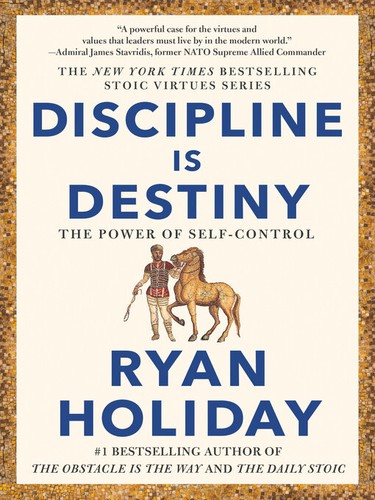
Discipline Is Destiny
Ryan Holiday
The second Stoic virtue, self-control, told through the lives of people who mastered themselves.
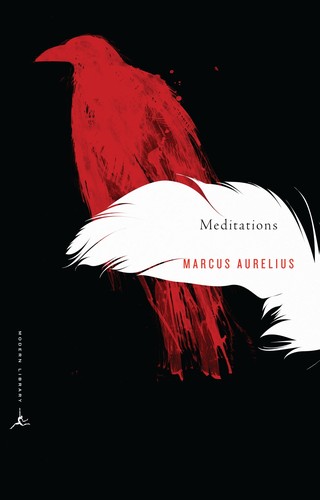
Meditations
Marcus Aurelius, translated by Gregory Hays
The private notebook of a Roman emperor. Short entries you can open anywhere; the most readable modern translation.
As an Amazon Associate we earn from qualifying purchases. More picks on our Books page.
