

At the end of the month you open your banking app and go through every line. Coffee, subscriptions, the gym you stopped going to. You know where almost every dollar went, and you feel a small sting at the ones you wasted.
Now try it with last week’s hours. Where did Tuesday go? A meeting, a lot of messages, a show you half-watched. The rest is fog. Nobody sends a statement for your time, so nobody feels the sting.
That gap is the subject of Seneca’s essay On the Shortness of Life. This on the shortness of life summary covers what the essay says, who it was written for (a detail that changes how you read it), and seven lessons you can use this week.
On the shortness of life summary: the essay in one paragraph
Seneca wrote De Brevitate Vitae, probably around 49 AD, as a letter-essay to a friend named Paulinus. It opens with a common complaint: life is too short, and ends just as we get ready to enjoy it. Seneca disagrees. Life is not short, he argues. We make it short, by handing our time to other people, to busywork, to vices, and above all to postponement. The “busy” person, the man who never belongs to himself, lives the shortest life of all, however many years he racks up. The only cure Seneca offers is to reclaim your time and spend a real part of it on understanding how to live, which for him means philosophy.
Here is the thesis in his own words, from the first chapter:
“Thus it is: we do not receive a short life, but we make it a short one, and we are not poor in days, but wasteful of them.”
Seneca, On the Shortness of Life 1 (trans. Aubrey Stewart, 1889)
And the line most people know, from chapter 2:
“Life is long enough, if you know how to use it.”
Seneca, On the Shortness of Life 2
Who Paulinus was, and why it matters
Most summaries skip the addressee. Paulinus was not an idle friend who needed a pep talk. Near the end of the essay we learn he held one of the hardest jobs in Rome: running the grain supply that fed the city. Seneca says it to his face:
“You manage the revenues of the entire world, as unselfishly as though they belonged to another, as laboriously as if they were your own, as scrupulously as though they belonged to the public”
Seneca, On the Shortness of Life 18
The essay about wasted time is addressed to Rome’s most careful accountant, a man who knew how much grain sat in each warehouse and, in Seneca’s eyes, had never audited his own hours. Then comes one of the sharpest lines in the essay:
“yet, believe me, it is better to understand your own mind than to understand the corn-market.”
Seneca, On the Shortness of Life 18
(“Corn” in older British English means grain.) Once you know who the reader was, the essay reads differently. It is not a lecture to lazy people. It is a letter to a competent, hardworking person who has confused being needed with living. That reader is more modern than most of us want to admit.
7 lessons from On the Shortness of Life
1. You guard your money better than your hours
Chapter 3 is the heart of the essay. Seneca notices that people will fight their neighbors over a few feet of property line, yet let anyone walk into their days:
“You cannot find any one who wants to distribute his money; yet among how many people does every one distribute his life?”
Seneca, On the Shortness of Life 3
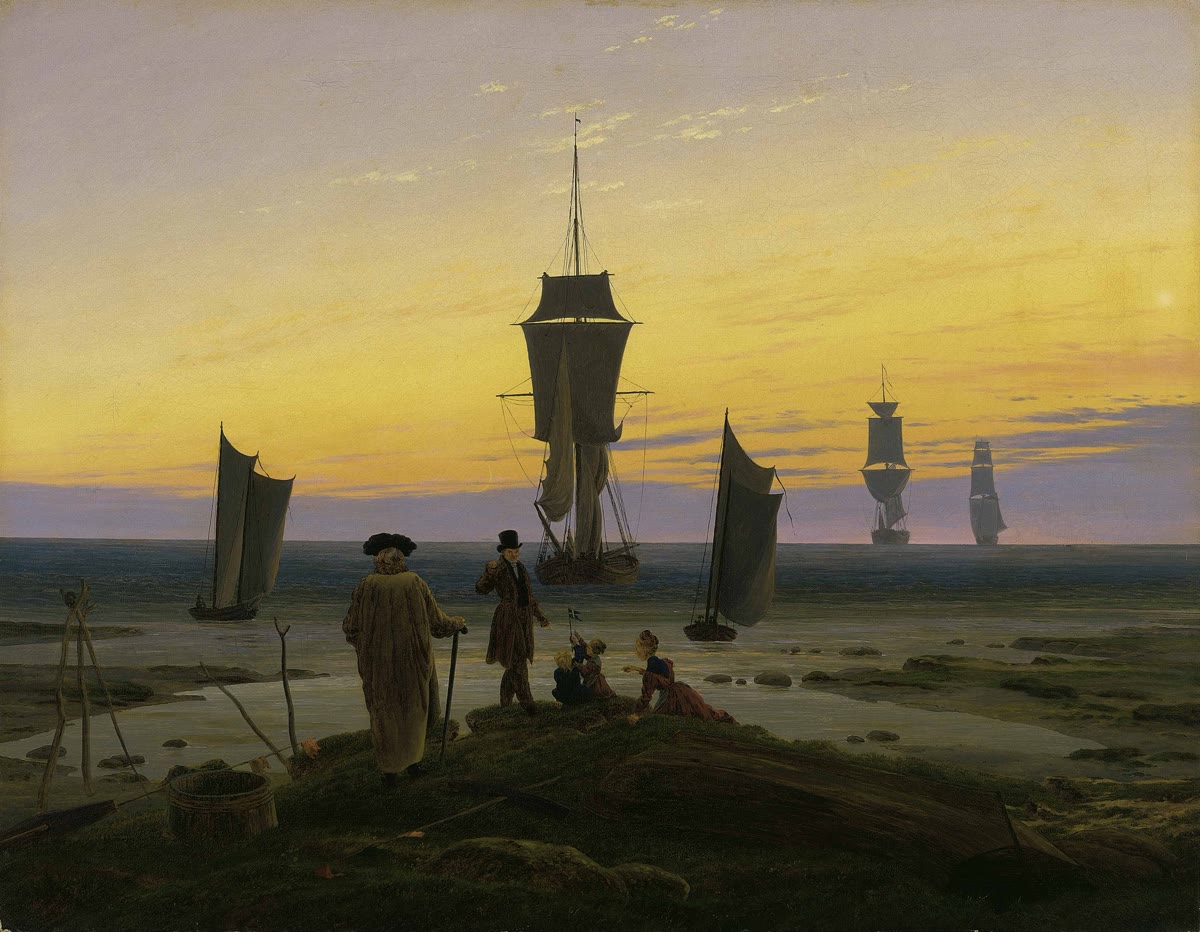
That is the painting at the top of this page: a moneylender and his wife weighing coins with total concentration. Seneca would ask: do you weigh your afternoons that carefully?
2. Time is cheap only because you can’t see it
Why do we do this? Seneca’s answer in chapter 8 is the most underrated idea in the essay. Time, he says, “escapes men’s notice, because it is an incorporeal thing, and because it does not come before our eyes; and therefore it is held very cheap, nay, hardly any value whatever is put upon it.”
We undervalue what we can’t see. The same people who give hours to anyone who asks will, Seneca notes, offer everything they own to a doctor when seriously ill. The value was always there; it just wasn’t visible. So the fix is to make time visible: write it down, the way you track money.
3. Do the audit in black and white
Seneca imagines stopping a man who has reached his hundredth year and handing him a ledger:
“Come now, reckon up your whole life in black and white: tell us how much of your time has been spent upon your creditors, how much on your mistress, how much on your king, how much on your clients, how much in quarrelling with your wife, how much in keeping your slaves in order, how much in running up and down the city on business.”
Seneca, On the Shortness of Life 3
Swap in modern categories (your inbox, your commute, your feed, your arguments) and the exercise still works. Seneca’s verdict on the old man’s ledger: “you will see that you have not lived as many years as you count.”
4. Postponement is the biggest leak
Of everything that steals time, Seneca singles out one as the worst. Not pleasure, not laziness. Waiting:
“yet postponement is the greatest waste of life: it wrings day after day from us, and takes away the present by promising something hereafter”
Seneca, On the Shortness of Life 9
In chapter 3 he quotes the person who plans to rest after fifty and leave public office at sixty. “How late it is to begin life just when we have to be leaving it!” The modern version is “after this project,” “once the kids are older,” “when I retire.” Seneca isn’t against planning. He is against using the future as a storage unit for the life you mean to live.
5. Long alive is not the same as living long
In chapter 7 Seneca draws a line between years and life: a gray-haired man “has not lived long, but has only been long alive.” Then he gives an image worth remembering. Picture a ship caught by a storm the moment it leaves port, driven around in circles by winds from every direction for months.
“such a man has not travelled much, he has only been much tossed about.”
Seneca, On the Shortness of Life 7
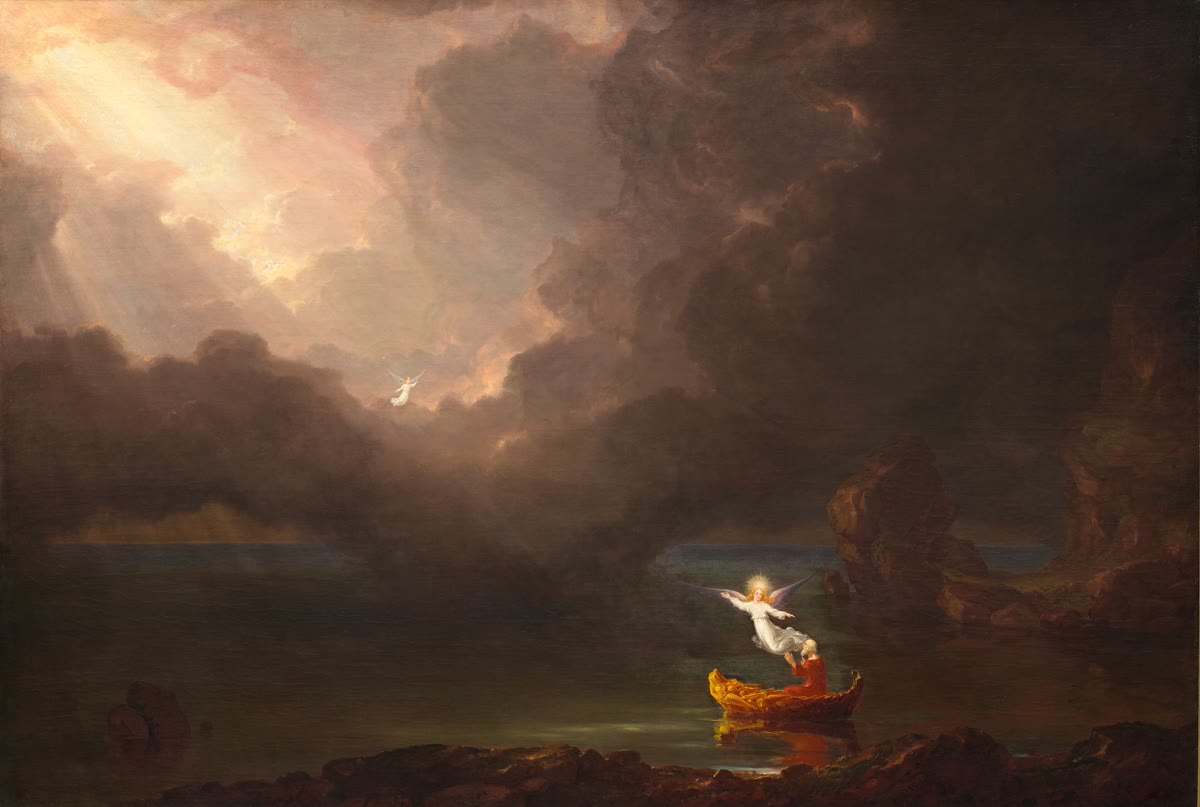
A packed calendar can feel like a long journey. Seneca asks whether you went anywhere.
6. Busy leisure is still busy
This lesson surprises people. Seneca does not say “work less and relax more.” In chapter 12 he mocks Romans who retire to their country houses and then spend hours on their bronze collections, their hairstyles, their dinner-party staging. “Some men’s leisure is busy”, he writes; such people “are not at leisure, but are busy about trifles.”
He even mocks scholars arguing over how many rowers Ulysses had. If you have lost an evening to scrolling, or to a deep dive you won’t remember next week, you know the type. Free time is not automatically your time.
7. The past is the one part nobody can take
Chapter 10 holds the essay’s most original idea, and almost nobody quotes it:
“Life is divided into three parts: that which has been, that which is, and that which is to come: of these three stages, that which we are passing through is brief, that which we are about to pass is uncertain, and that which we have passed is certain”
Seneca, On the Shortness of Life 10
The past, he says, is “beyond the reach of all human accidents”. Fortune can’t touch it. But busy people can’t enjoy it, because they never stop to look back, and when they do, they don’t like what they see. So the reward for spending your days well is a past you can actually revisit with a clear conscience. A well-spent day is a permanent possession.
And where does Seneca say the best time goes? Into the company of the wise. “The only persons who are really at leisure are those who devote themselves to philosophy: and they alone really live” (chapter 14). Socrates, Zeno, and the rest, he adds, are never “engaged,” never too busy to see you, and available by night as well as by day. In other words: read.
A Seneca time audit you can do today
Here is the essay turned into a practice. It takes about 20 minutes, once.
- Open a blank page and draw two columns. Left: “Given away.” Right: “Kept for myself.” This is Paulinus’s ledger, finally pointed at his own hours.
- Reconstruct yesterday in hour blocks. Use your calendar and screen-time report as your bank statement. Write where each block actually went.
- Sort every block into a column. Time you chose to give to people and work you value goes on the right. Seneca’s complaint is time that leaked away without a decision.
- Circle one “postponed” item. Find the thing you keep saying you’ll do “once things calm down.” Seneca would call it the greatest waste of life.
- Book one hour for it this week. Put it in your calendar like a meeting. Treat it the way you’d treat money you refuse to spend on anything else.
- Spend 10 minutes of that hour with a wise mind. Read a page of Seneca, Marcus, or any book that makes you better. That’s chapter 14, done literally.
For the day-to-day side, our guide to Stoic time management picks up where the audit leaves off. If the left column is mostly other people’s requests, read the Stoic art of saying no. And Seneca’s urgency rests on a fact he keeps returning to, that any day “is perhaps your last”, which we unpack in what memento mori really means.
Here’s the 30-second version, if you only have 30 seconds:
What On the Shortness of Life does not mean
It doesn’t mean “quit your job.” Seneca tells Paulinus to step back from public office, but Paulinus was a senior official who had already given most of his working life to the state. Seneca himself stayed deeply involved in Roman politics for years after writing this. The lesson is to stop giving all of yourself away by default, not to walk out on your responsibilities.
It isn’t a productivity hack. Seneca is not telling you to squeeze more tasks into each hour. The goal is not output; it’s owning your time and spending a real part of it on becoming wiser and better.
It doesn’t mean helping people is a waste. His target is the man who “belongs to” a crowd of clients and patrons out of ambition and habit, the one for whom “no one belongs to himself.” Time you choose to give, to family, friends, or a cause, is time you own. The question is whether you chose it.
It isn’t hurry. “live now straightway” (chapter 9) can sound like “rush.” But in Seneca it is the busy men who hurry. His alternative is calmer: a person who arranges each day “as though he were arranging the plan of his life” and so “neither wishes for nor fears the morrow” (chapter 7).
Frequently asked questions
What is the main idea of On the Shortness of Life?
That life is not too short; we make it short by wasting it. Seneca argues that we hand our time to other people, to trivial pursuits, and above all to postponement. Used well, he says, an ordinary lifespan is long enough for the most important things.
Who was Paulinus in On the Shortness of Life?
The friend Seneca addressed the essay to. He ran Rome’s grain supply, a huge and stressful job, and many scholars think he was a relative of Seneca’s wife, Pompeia Paulina. Seneca urges him to take back part of his life for philosophy.
Did Seneca really say “life is long if you know how to use it”?
Yes, close to it. In chapter 2, Aubrey Stewart’s 1889 translation reads: “Life is long enough, if you know how to use it.” Modern translations word it slightly differently, but the idea is Seneca’s own.
How long is On the Shortness of Life, and is it hard to read?
It’s short: 20 brief chapters, about an hour of reading. Stewart’s Victorian English is free online but a bit stiff. For a smoother version, C. D. N. Costa’s translation in the Penguin edition, On the Shortness of Life, is easy to read in one sitting.
What does Seneca mean by “busy” people?
Not just people with jobs. He means anyone who never belongs to themselves: people driven by ambition, other people’s demands, vices, or even fussy hobbies. The test is whether you decided how your time was spent.
If you want to read the whole essay, Aubrey Stewart’s translation is free on Project Gutenberg, in his volume of Seneca’s Minor Dialogues. Look for “Of the Shortness of Life,” the tenth book of the dialogues.
Epic Stoic publishes one deep-dive on Stoic philosophy every week: the original texts, what they meant, and how to use them. Watch the short version on our YouTube channel.
Recommended reading
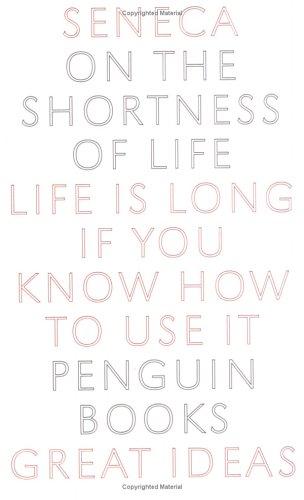
On the Shortness of Life
Seneca, translated by C. D. N. Costa
“Life is long if you know how to use it.” A pocket-sized essay on time that belongs on every phone-addicted desk.
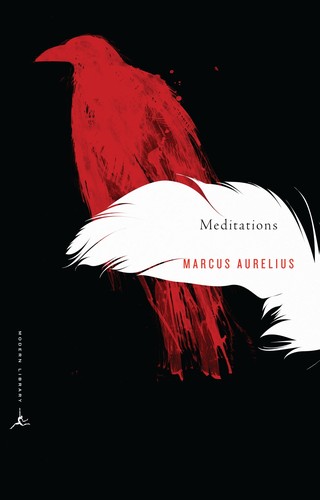
Meditations
Marcus Aurelius, translated by Gregory Hays
The private notebook of a Roman emperor. Short entries you can open anywhere; the most readable modern translation.
As an Amazon Associate we earn from qualifying purchases. More picks on our Books page.
