

You’ve been posting on your new channel for six months. You check the numbers most evenings, and they barely move. Meanwhile someone else seems to have gone viral in a week. You start wondering whether to change everything, or quit altogether.
Almost everyone who has tried to build something worthwhile, a business, a skill, a body of work, a relationship, has stood in that spot. The Stoics had a lot to say about it. They didn’t promise that patience always pays off on schedule. They said something more useful: that the way you carry yourself while you wait is the real work, and it is fully up to you. Here’s what they wrote, how to practise it, and the misreading that turns persistence into stubbornness.
What the Stoics actually said
Epictetus and the fig tree
The line often quoted as “No great thing is created suddenly” comes from a real conversation. A man asked Epictetus how he could stay calm even if his angry brother never forgave him. Epictetus answered:
“Nothing great, said Epictetus, is produced suddenly, since not even the grape or the fig is. If you say to me now that you want a fig, I will answer to you that it requires time: let it flower first, then put forth fruit, and then ripen.”
Epictetus, Discourses 1.15 (George Long translation)
Notice the context. Epictetus isn’t talking about money or business growth. He’s talking about the fruit of a person’s character: becoming someone who stays steady when others treat them badly. If a fig takes a season, he asks, why would you expect to transform your own mind in an hour?
That’s the deepest kind of patience the Stoics cared about. Patience with results matters, but patience with your own slow improvement matters more.
Marcus Aurelius and the promontory
Persistence, for the Stoics, wasn’t frantic effort. It was a kind of steadiness. Marcus Aurelius put it in one image:
“Be like the promontory against which the waves continually break, but it stands firm and tames the fury of the water around it.”
Marcus Aurelius, Meditations 4.49 (George Long translation)
The rock doesn’t stop the waves, and it doesn’t chase them. It simply stays where it is. Setbacks keep coming: rejections, slow months, criticism. The persistent person isn’t the one who never gets hit. It’s the one who is still standing after the tide goes out.
In the same entry Marcus adds that a misfortune borne nobly is itself a kind of good fortune. That’s how the Stoics turned setbacks into fuel: not by pretending they were pleasant, but by treating each one as a chance to practise courage and calm.
Seneca on not postponing
Patience can be misused as an excuse to wait for the perfect moment. Seneca closes that door in his very first letter:
“Hold every hour in your grasp. Lay hold of to-day’s task, and you will not need to depend so much upon to-morrow’s. While we are postponing, life speeds by.”
Seneca, Moral Letters to Lucilius 1.2 (Richard Mott Gummere translation)
This is the balance. Patience about the outcome; urgency about today’s task. You can’t make the fig ripen faster, but you can water the tree this morning.
Patience and persistence in practice
1. Why patience matters in business and life
Most meaningful things grow on a schedule you don’t set: a customer base, a reputation, a skill, trust between people. Getting angry at that schedule doesn’t shorten it. Patience lets you accept delays and uncertainty without letting them push you into rash decisions.
- Stop judging your work by this week’s numbers. Look at the trend over months.
- Treat time as an ally: steady effort compounds, but only if you are still there to collect it.
- When you feel the itch to change everything, wait a week before acting.
2. Persistence: steady action, not heroic bursts
Patience is how you wait. Persistence is what you do while you wait. Marcus reminded himself again and again to get up and do his duty, not because it was exciting, but because it was his.
- Commit to small daily actions you can sustain on a bad day.
- Break big goals into steps you can finish in under an hour.
- Track whether you showed up, not only whether it worked.
3. Turning setbacks into training
When something goes wrong, patience stops you from panicking and persistence stops you from quitting. Between them, a setback becomes information and practice.
- Ask: what does this teach me, and what will I do differently?
- Separate the part that was up to you (your effort, your choices) from the part that wasn’t (timing, other people, luck).
- Keep moving, even if the next step is small.
4. Playing the long game
For the Stoics, the only thing fully in your control is your own character. That makes it the one investment that can’t be taken away. A long game built on integrity is worth more than a quick win that requires cutting corners.
- Define long-term goals that fit your values, not just your ambitions.
- Refuse shortcuts you’d be ashamed to explain.
- Remind yourself that who you become while building is part of what you build.
Exercise: the weekly fig-tree review
This takes about 15 minutes, once a week. It’s designed to keep your effort steady while keeping your expectations honest.
- Write your long-term aim in one sentence. Something that will take at least a year, such as “build a business that supports my family” or “become a good public speaker.”
- List what you did this week that served that aim. Only actions, not results.
- Split the week’s outcomes into two columns: what was up to you (effort, quality, honesty) and what wasn’t (sales, replies, algorithms, timing).
- Judge yourself only on the first column. Did you do your part well? If yes, the week was a success, whatever the second column says.
- Pick one adjustment for next week, based on what you learned, not on frustration.
- Read Epictetus’ fig line once, and close the notebook.
Over a few months this builds a record of steady effort you can look back on, which is often the best cure for the feeling that nothing is happening.
The common mistake: confusing persistence with stubbornness
The Stoics were not saying “never change course.” Persistence means holding on to your aim and your character. It doesn’t mean holding on to a plan that clearly isn’t working. A promontory stands firm, but the person who keeps banging their head against the same wall isn’t being Stoic; they’re being attached.
The opposite mistake is just as common: calling passivity “patience.” Waiting for the right moment, the right mood, or more information can go on forever. Seneca’s warning applies: while we are postponing, life speeds by.
The fix is to be patient with outcomes, persistent with effort, and flexible with tactics. Keep the aim. Keep showing up. Change the method when the evidence tells you to.
A closing thought
If your progress feels slow, that doesn’t mean it isn’t happening. Figs ripen on their own schedule. Your job is to tend the tree, stand firm when the waves come, and do today’s task today.
The results may come later than you hoped. The person you become while you wait is yours right away.
Recommended reading

On the Shortness of Life
Seneca, translated by C. D. N. Costa
“Life is long if you know how to use it.” A pocket-sized essay on time that belongs on every phone-addicted desk.
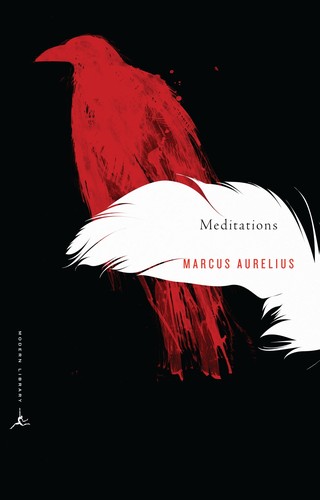
Meditations
Marcus Aurelius, translated by Gregory Hays
The private notebook of a Roman emperor. Short entries you can open anywhere; the most readable modern translation.
As an Amazon Associate we earn from qualifying purchases. More picks on our Books page.
