

The alarm goes off at 6:30. Before your feet touch the floor, your thumb has already opened the phone. Three work emails, a news alert, a message from a group chat you meant to mute. By the time you reach the kettle, other people have already decided what you’re thinking about.
Most of us start the day this way, and then wonder why we feel behind by nine o’clock. The Stoics had no phones, but they knew the problem well: the first hour sets the tone, and if you don’t choose it, something else will. Here is what Marcus Aurelius and Seneca actually wrote about mornings, a simple routine built from their advice, and the mistake that turns a Stoic morning into one more chore.
What the Stoics actually said about mornings
Marcus Aurelius didn’t want to get up either
It’s comforting to know that the most powerful man in the Roman world struggled with his alarm. In his private notebook, now called the Meditations, he wrote this to himself:
“In the morning when thou risest unwillingly, let this thought be present: I am rising to the work of a human being. Why then am I dissatisfied if I am going to do the things for which I exist and for which I was brought into the world? Or have I been made for this, to lie in the bed-clothes and keep myself warm?”
Marcus Aurelius, Meditations 5.1 (George Long translation)
Notice what he doesn’t do. He doesn’t shame himself or pretend he is full of energy. He reminds himself what the day is for. Getting out of bed becomes a small answer to a big question: what was I made to do? For Marcus, the answer was to be useful to other people and to act well. Comfort was allowed, but it wasn’t the point.
Expect difficult people before you meet them
Book 2 of the Meditations opens with what may be the most famous morning exercise in Stoicism:
“Begin the morning by saying to thyself, I shall meet with the busybody, the ungrateful, arrogant, deceitful, envious, unsocial. All these things happen to them by reason of their ignorance of what is good and evil.”
Marcus Aurelius, Meditations 2.1 (George Long translation)
This sounds gloomy on first reading. It isn’t. Marcus goes on to say that these people are his kin, and that he can’t be harmed by them or angry with them, because we are made to work together. The point of naming the difficult people in advance is so they don’t surprise you. When the rude colleague is rude at eleven, you already met him at seven, calmly, in your head.
Seneca on owning your hours
Seneca’s very first letter to his friend Lucilius is about time, and it reads like it was written for anyone who has lost a morning to scrolling:
“Hold every hour in your grasp. Lay hold of to-day’s task, and you will not need to depend so much upon to-morrow’s. While we are postponing, life speeds by.”
Seneca, Moral Letters to Lucilius 1.2 (Richard Mott Gummere translation)
In the same letter he says that nothing is truly ours except time, and that we let others take it from us without noticing. A morning routine is simply a way of holding the first hour in your grasp before anyone else reaches for it.
A Stoic morning routine in five parts
None of these need to take long. The whole routine can fit into 20 to 30 minutes, and on a rushed day you can shrink it to five.
1. Begin with reflection, not the phone
The Stoics practised what later writers called praemeditatio malorum, the rehearsal of difficulties. It’s exactly what Marcus does in 2.1: picture what might go wrong today, and decide in advance how you want to meet it. This isn’t pessimism. It’s preparation, the same way a pilot runs through emergency procedures on a calm day.
- Write down three things that could go wrong today.
- For each, note how you’d like to respond: with patience, honesty, or calm.
- Remind yourself which part is up to you: no matter what comes, my response is mine.
2. Ground yourself in gratitude
Seneca often reminds Lucilius that what we have is on loan, and that the wise person enjoys it without clinging. A short moment of appreciation in the morning puts that idea into practice. You notice what you have before the day starts telling you what you lack.
- Name three things you’re glad of right now.
- Keep them simple and specific: a person, a meal, a working body.
- Remember that none of them is guaranteed, which is exactly why they are worth noticing.
3. Move the body, train the will
The Stoics treated small hardships as training. Musonius Rufus, Epictetus’ teacher, taught that the body should be trained alongside the mind, because enduring cold, heat and effort builds the kind of steadiness that carries over to everything else. You don’t need a punishing workout. You need a small, regular act of doing something slightly hard on purpose.
- Take 15 to 30 minutes of movement: a walk, stretching, a short run.
- Value consistency over intensity. Ten minutes every day beats an hour once a week.
- Notice the moment you want to stop, and go a little further. That’s the training.
4. Journal with purpose
The Meditations were never meant to be published. They were Marcus talking to himself, reminding himself of what he already knew and kept forgetting. That’s a good model for a morning journal: not a diary of events, but a few lines that point you in the right direction.
- Choose one virtue to practise today: wisdom, courage, justice or self-control.
- Look back at yesterday: where did you act well, and where did you slip?
- Write down the one action that matters most today.
5. Do the important work before the world interrupts
This is Seneca’s advice made practical. If the first hour belongs to your inbox, the day will belong to it too. Give that hour instead to the task you’d be proudest to finish.
- Spend the first focused block of the day on your top priority.
- Keep notifications off until that block is done.
- Ask: what would I regret leaving undone if today were cut short?
A five-minute version for busy mornings
Some mornings there’s a baby crying, a train to catch, or a deadline at nine. On those days, use this short version. It keeps the core of the practice and drops everything else.
- Before you check your phone, sit up and take three slow breaths. This is the gap that lets you choose the day instead of reacting to it.
- Say Marcus’ line to yourself: “I am rising to the work of a human being.” Then name the work: the meeting, the children, the project.
- Picture one difficulty you’re likely to meet, and decide in one sentence how you want to handle it.
- Name one thing you’re grateful for. Just one, said out loud or in your head.
- Pick the single task that matters most, and do at least the first ten minutes of it before you open your messages.
That’s it. If you do nothing else, these five steps will still change how the rest of the day feels.
The common mistake: turning the routine into a performance
The most common way to get a Stoic morning wrong is to treat it as a checklist you have to complete perfectly. You build a 90-minute routine, miss it twice, feel guilty, and give up. Or you complete it every day but spend the rest of the day irritable and rushed, which misses the point entirely.
The Stoics weren’t interested in rituals for their own sake. Marcus didn’t write about cold showers or optimal wake-up times. He wrote about remembering why he gets up, and about meeting other people with patience. The routine is only a tool for that. If you skip it one morning, nothing is lost; you can do the reflection at lunch, or on the bus.
A second misreading is to think the rehearsal of difficulties means expecting the worst and dreading the day. Marcus names the busybody and the ungrateful person so that he can forgive them in advance, not so he can stew. If your morning reflection leaves you anxious rather than steady, shorten it, and end it with what is up to you.
Starting tomorrow
You don’t need a new alarm clock or a special journal. Tomorrow, before you reach for your phone, try the five-minute version once. Notice how the first hour feels when you have chosen it yourself.
Marcus got out of bed, unwillingly, for decades, by reminding himself what the day was for. You can do the same, one morning at a time.
Recommended reading

On the Shortness of Life
Seneca, translated by C. D. N. Costa
“Life is long if you know how to use it.” A pocket-sized essay on time that belongs on every phone-addicted desk.
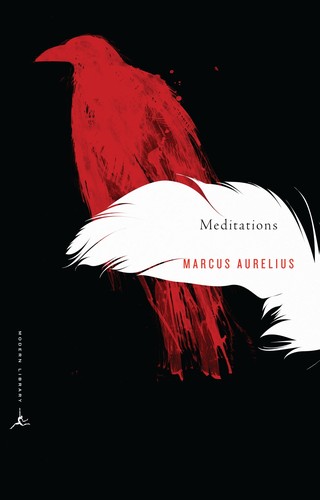
Meditations
Marcus Aurelius, translated by Gregory Hays
The private notebook of a Roman emperor. Short entries you can open anywhere; the most readable modern translation.
As an Amazon Associate we earn from qualifying purchases. More picks on our Books page.
