

A New Year Means Nothing If Nothing Changes
A new year arrives quietly.
No reset button. No forgiveness from time. No guarantees.
What determines whether this year will be different is not motivation, resolutions, or hope —
it is honest reflection and disciplined action.
Many people step into a new year carrying the same habits, the same reactions, the same excuses. They promise change but refuse responsibility. And so the cycle repeats.
Stoicism offers a harder, better path:
learn from the past, take ownership, and move forward deliberately.
1. Stop Romanticizing the Past Year
The first mistake people make is lying to themselves about the past.
They say:
- “It wasn’t that bad”
- “It wasn’t my fault”
- “Next year will be different”
A Stoic does not soften reality. He faces it.
Ask yourself, honestly:
- Where did I waste time?
- Where did I avoid responsibility?
- Where did I repeat the same mistake more than once?
There is no growth without truth.
2. Identify Patterns, Not Isolated Failures
One bad decision is human.
Repeating the same mistake is a pattern.
Look back and identify:
- Habits that quietly sabotaged progress
- Emotional reactions that cost you energy or respect
- Comfort zones you stayed in despite knowing better
Stoicism teaches that self-awareness is power.
If you can see the pattern, you can break it.
3. Take Full Ownership — Without Self-Pity
Stoicism rejects blame.
Not because life is fair — but because blame is useless.
This year becomes stronger the moment you say:
- “This was my responsibility”
- “This was my decision”
- “This was my failure to act”
Not with guilt.
With clarity.
Ownership removes excuses. And when excuses disappear, progress begins.
4. Replace Goals With Standards
Goals depend on motivation.
Standards depend on discipline.
Instead of saying:
- “I want to be better”
- “I hope to succeed”
Set standards:
- I act even when I don’t feel like it
- I don’t repeat mistakes I already understand
- I don’t trade long-term growth for short-term comfort
A Stoic lives by non-negotiable standards, not emotional promises.
5. Do Fewer Things — But Do Them Right
One reason mistakes repeat is overload.
Too many goals. Too many plans. Too much noise.
Stoicism values simplicity.
Choose:
- One habit to remove
- One habit to build
- One responsibility to take seriously
Consistency beats ambition.
Every time.
6. Use Daily Reflection as a Weapon
Mistakes repeat when days go unexamined.
Each evening, ask:
- What did I do right today?
- Where did I act against my values?
- What must not happen again tomorrow?
Five minutes of reflection can save years of regret.
This is not overthinking.
This is course correction.
7. Remember: Time Is Not On Your Side
A Stoic never forgets one uncomfortable truth:
time is finite.
Another year passing is not neutral.
You either used it well — or you didn’t.
Let this awareness sharpen your focus, not scare you.
You don’t need to do everything this year.
You need to stop repeating what already failed.
Conclusion: Strength Comes From Learning, Not Hoping
Starting the new year strong doesn’t mean being perfect.
It means being honest, disciplined, and intentional.
The Stoic path is simple but demanding:
- Learn from what hurt
- Correct what failed
- Repeat what worked
- Eliminate what didn’t
If you carry the past as wisdom instead of baggage,
this year won’t just be new — it will be stronger.
Not because life changed.
But because you did.
Recommended reading
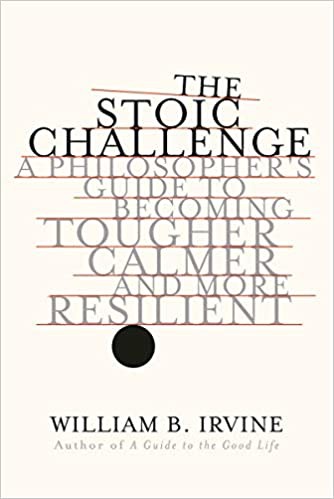
The Stoic Challenge
William B. Irvine
How to treat setbacks as tests of your character, from a flat tyre to a lost job. Short, funny and useful.

Meditations
Marcus Aurelius, translated by Gregory Hays
The private notebook of a Roman emperor. Short entries you can open anywhere; the most readable modern translation.
As an Amazon Associate we earn from qualifying purchases. More picks on our Books page.
