

The Ancient Code Modern Life Desperately Needs
We live in a world that feels chaotic, emotional, and unpredictable.
If you want clarity, strength, and peace in today’s world, you don’t need new apps or complicated routines —
you need ancient rules that have already stood the test of time.
The Stoics lived by a simple but powerful code — a set of principles that shaped warriors, emperors, philosophers, and leaders.
If you follow these 5 rules, your life will change immediately.
1. Rule One: Control What You Can. Ignore What You Can’t.
Everything becomes easier when you stop fighting battles you can’t win.
Most stress comes from trying to change people, events, outcomes, or circumstances outside your control.
Stoics don’t waste energy. They focus it.
“Some things are up to us and some are not.” — Epictetus
Instant improvement:
- Less anxiety
- More clarity
- Better decision-making
If it’s not yours to control — release it.
2. Rule Two: Respond, Don’t React
Reactions are emotional. Responses are intentional.
When you react instantly, emotion controls you.
When you pause before speaking or acting, you take control.
This one rule separates weak minds from strong ones.
“You have power over your mind — not outside events.” — Marcus Aurelius
Instant improvement:
- Fewer regrets
- Stronger relationships
- Emotional stability
Master the pause — that’s where wisdom lives.
3. Rule Three: Focus on Virtue, Not Approval
People spend their lives trying to impress others.
Stoics focus on living with virtue — wisdom, courage, justice, and temperance — even if no one notices.
When approval no longer controls you, you become unstoppable.
“If it is not right, do not do it. If it is not true, do not say it.” — Marcus Aurelius
Instant improvement:
- Confidence skyrockets
- Pressure drops
- Peace increases
Live by values, not validation.
4. Rule Four: Turn Obstacles Into Opportunities
Stoics believed every difficulty contains hidden potential.
A setback isn’t the end — it’s a new beginning in disguise.
The obstacle is not blocking the path — it is the path.
“The impediment to action advances action.” — Marcus Aurelius
Instant improvement:
- You stop feeling defeated
- You grow stronger, not weaker
- You become resilient under pressure
There is no such thing as a bad situation — only unused training.
5. Rule Five: Practice Daily Reflection
Your greatest power is understanding yourself.
The Stoics reviewed each day — what they did well, where they failed, and what they would improve tomorrow.
This habit alone can transform your entire life.
“When the day is done, ask yourself what good you have done.” — Seneca
Instant improvement:
- Clear priorities
- Steady self-improvement
- Better self-awareness
Five minutes of reflection can fix years of repeating the same mistakes.
Conclusion: Live the Code, Own Your Life
These 5 rules are simple — but life-changing.
Follow them daily and you will think clearer, act stronger, and live wiser.
The Stoic Code isn’t about philosophy.
It’s about mastering yourself so life can no longer control you.
Apply it now — and watch your entire world shift.
Recommended reading
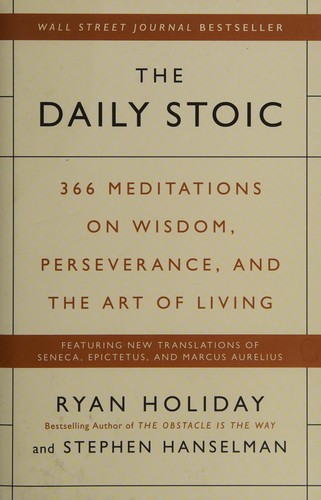
The Daily Stoic
Ryan Holiday and Stephen Hanselman
366 short readings, one per day, each a Stoic passage with a modern reflection. The easiest daily habit to start.
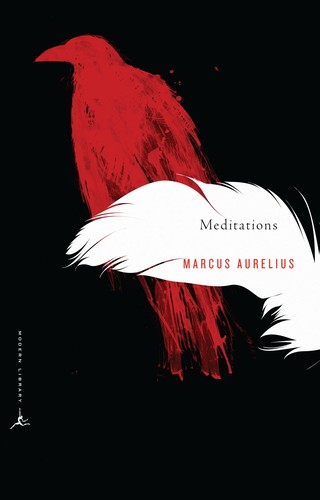
Meditations
Marcus Aurelius, translated by Gregory Hays
The private notebook of a Roman emperor. Short entries you can open anywhere; the most readable modern translation.
As an Amazon Associate we earn from qualifying purchases. More picks on our Books page.
