
Your phone buzzes at 6:40 a.m. The office building flooded overnight, the servers are gone, and nobody knows when anyone can go back in. One colleague is already calling people, renting a temporary space, restoring backups. Another is frozen in the group chat, typing “I can’t believe this” for the fifth time.
Both are smart. The difference is that one of them once asked, on a quiet afternoon: “What would we do if this building just disappeared?”
The Stoics had a name for that strange question. Today it is usually called premeditatio malorum, “the premeditation of evils”: the habit of rehearsing hardship in your mind before it arrives, so that it doesn’t arrive as a stranger. This guide goes back to the actual texts, including a letter about a city that burned down in one night, and turns them into an exercise you can do in ten minutes.
A city gone in one night: Seneca’s Letter 91
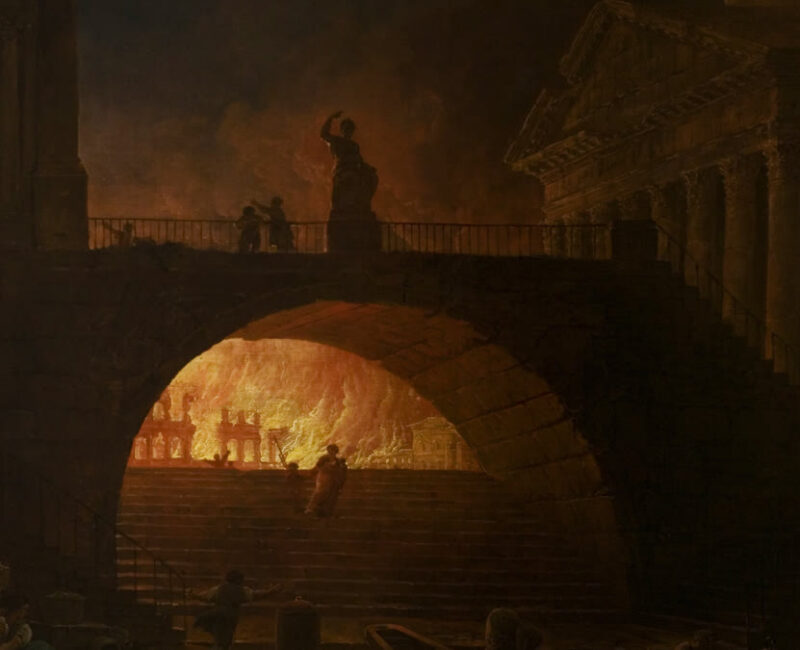
Around AD 64, news reached Rome that Lugdunum, the Roman colony we now call Lyon, had burned to the ground. Seneca’s friend Liberalis came from there, and he took it hard. Seneca wrote to Lucilius about it, and the letter is the best single text we have on premeditation.
This was not a fire that damaged a city. It erased one:
“Every great creation has had granted to it a period of reprieve before its fall; but in this case, only a single night elapsed between the city at its greatest and the city non-existent.”
Seneca, Moral Letters to Lucilius, Letter 91.2
Then comes the detail most summaries skip. Liberalis was not an untrained man. Seneca says the disaster made him test the strength of his character, “which he has trained, I suppose, just to meet situations that he thought might cause him fear” (91.1). Liberalis had prepared. He had just prepared for the wrong list. He had rehearsed the things people normally worry about, and the thing that happened wasn’t on it.
That is the real problem Seneca is trying to solve, and his diagnosis is precise:
“And not without reason has he been shaken; for it is the unexpected that puts the heaviest load upon us. Strangeness adds to the weight of calamities, and every mortal feels the greater pain as a result of that which also brings surprise.”
Letter 91.3
“Not what is wont to happen, but what can happen”
Here is the core instruction, in Richard Gummere’s 1917 translation:
“Therefore, nothing ought to be unexpected by us. Our minds should be sent forward in advance to meet all problems, and we should consider, not what is wont to happen, but what can happen.”
Letter 91.4
The Latin draws the line in two small verbs: cogitandumque non quidquid solet sed quidquid potest fieri. Not what usually happens (solet), but what can happen (potest).
That distinction separates premeditation from ordinary planning. Planning covers the likely: the delayed flight, the slow quarter. Premeditation walks past the likely to the possible, because that is where surprise lives, and surprise is what adds the extra weight.
He then names the categories directly:
“We should therefore reflect upon all contingencies, and should fortify our minds against the evils which may possibly come. Exile, the torture of disease, wars, shipwreck,—we must think on these.”
Letter 91.7–8
Where the name premeditatio malorum comes from
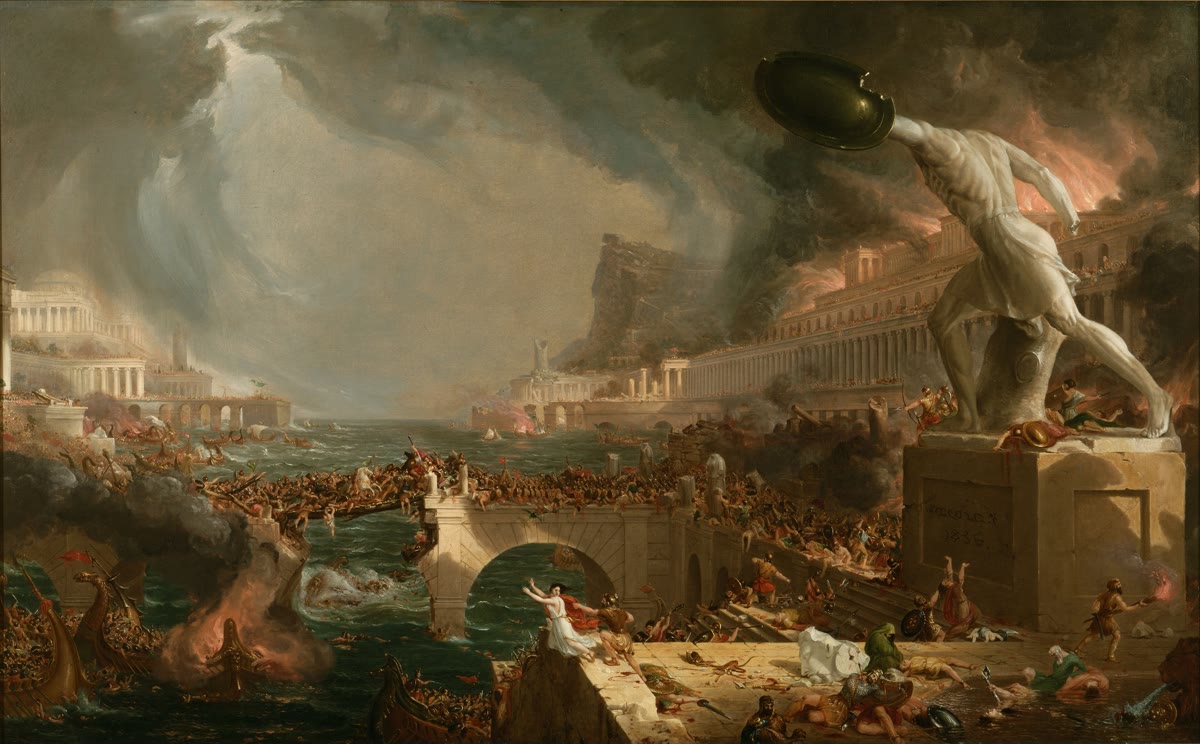
“Premeditatio malorum” is usually labeled a Stoic technique. The source story is more interesting. The fullest ancient wording is Cicero’s, in Book III of the Tusculan Disputations, a set of dialogues on grief written in 45 BC:
“Therefore, this ruminating beforehand upon future evils which you see at a distance makes their approach more tolerable”
Cicero, Tusculan Disputations 3.29 (trans. C. D. Yonge)
In Latin: Haec igitur praemeditatio futurorum malorum lenit eorum adventum. Literally, “this premeditation of future evils softens their arrival.” The short two-word label people use today is a modern trim of that phrase.
And Cicero is clear that the idea did not start with the Stoics. He credits the Cyrenaics, a school that held grief comes mainly from the unexpected, and he says he is happy “to borrow of the Cyrenaics those arms against the accidents and events of life” (3.31). His favorite example is the philosopher Anaxagoras, who, on hearing that his son had died, is reported to have said: “I knew that my son was mortal” (3.30; sciebam me genuisse mortalem). The Stoic Chrysippus agreed, Cicero adds: “Whatever falls out unexpected is so much the heavier” (3.52).
The objection: isn’t this just worrying on purpose?
Cicero also records a serious objection, from Epicurus. It’s the one most people still raise about negative visualization:
“he who is constantly considering that some evil may befall him is loading himself with a perpetual evil; and even should such evil never light on him, he voluntarily takes upon himself unnecessary misery”
Cicero, Tusculan Disputations 3.32, reporting Epicurus
Fair enough: done badly, premeditation is just anxiety with a Latin name. Cicero’s answer, which is also the Stoic answer, is the key to doing it right. Premeditation works, he says, because “those very evils themselves arise more from opinion than nature, for if they were real, no forecast could make them lighter” (3.31). In other words: thinking ahead can’t change a broken leg. What it changes is the judgment you will make about the broken leg, especially the panicked judgment “this is unthinkable.” A rehearsal is not meant to make you feel the disaster in advance. It’s meant to make the disaster thinkable, so the shock has nothing to grip.
The practical rule: premeditation that leaves you more frightened is being done wrong. Done right, it ends in a calmer judgment and, usually, a to-do item.
Seneca’s two tools: measure it, then live it
Measure the fear (Letter 24)
Lucilius is anxious about a lawsuit. He expects his teacher to say “think positive.” Seneca does the opposite:
“if you would put off all worry, assume that what you fear may happen will certainly happen in any event; whatever the trouble may be, measure it in your own mind, and estimate the amount of your fear. You will thus understand that what you fear is either insignificant or short-lived.”
Letter 24.2
The useful verb is measure. “I might lose the case” is a fog. “I might lose the case, pay this amount, and spend a hard year rebuilding” is a problem with a size and an end date.
Rehearse it in real life (Letter 18)
Seneca also goes beyond imagination. In Letter 18 he tells Lucilius to try a small, physical version of the thing he fears:
“Set aside a certain number of days, during which you shall be content with the scantiest and cheapest fare, with coarse and rough dress, saying to yourself the while: “Is this the condition that I feared?””
Letter 18.5
And he explains why, with an image any athlete or soldier would recognize:
“In days of peace the soldier performs manœuvres, throws up earthworks with no enemy in sight, and wearies himself by gratuitous toil, in order that he may be equal to unavoidable toil.”
Letter 18.6
The tender version: Epictetus at the bedside
Epictetus applies premeditation to the people we love, and his version is the hardest to read:
“What harm is it while you are kissing your child to say with a lisping voice: To-morrow you will die; and to a friend also: To-morrow you will go away or I shall, and never shall we see one another again?”
Epictetus, Discourses 3.24.88 (trans. George Long)
It sounds cold. In practice, remembering that the people you love are on loan is the fastest way to stop taking them for granted. He makes the same point more briefly in the Enchiridion: “If you are kissing your child or wife, say that it is a human being whom you are kissing” (Enchiridion 3). The goal is not to love less. It’s to love with your eyes open. If this part speaks to you, our guide to what memento mori really means goes deeper.
How to practice premeditatio malorum: a 10-minute exercise
Here is the method above turned into something you can do with a notebook today. Set a timer for ten minutes. The timer matters: it is your answer to Epicurus.
- Choose one thing you depend on. Your job, health, a relationship, your home. One per session.
- Write the “can happen” version, not the “usually happens” version. Follow Seneca’s potest, not solet. Not “my project might be late,” but “the company might cancel my whole department.” One concrete sentence.
- Measure it. As in Letter 24: what would the first week actually look like? The third month? What would it cost, and how long would it last? Write numbers and dates, not adjectives.
- Find what would still be yours. Your skills, your character, the people who would help, your ability to choose your next move. This is the dichotomy of control applied before the crisis instead of during it.
- Name one preparation you can do this week. Update the résumé, back up the files, book the checkup, call the friend you have been meaning to call. If there’s nothing useful to do, write “nothing to do” and move on.
- Come back to the present. Look at the thing you just imagined losing. It’s still here. Notice that. This step is where the exercise turns into gratitude instead of dread.
- Once a month, rehearse it for real. Following Letter 18, pick a small, safe version: a day of plain food, a cold shower, a weekend without your phone, a week living on a tighter budget. Ask Seneca’s question: “Is this the condition that I feared?”
When the timer goes off, close the notebook. A drill has an end. Rumination doesn’t.
Here is Seneca’s short reminder of the difference:
What premeditatio malorum does not mean
It does not mean worrying. Seneca is the same writer who warns against running out to meet your suffering. We covered that side in “We suffer more in imagination than in reality”. The two ideas fit together: premeditation is a short, deliberate rehearsal that ends in a calmer judgment. Worry is the same film on a loop, without your permission and without an ending.
It does not mean expecting the worst. You imagine what can happen, not what will. Seneca even closes Letter 91 with hope for Lyon: “Oftentimes a reverse has but made room for more prosperous fortune” (91.13). Preparing for the fire and hoping the city is rebuilt better are not in conflict.
It does not mean you won’t feel it. Seneca says plainly that Liberalis was “not without reason” shaken (91.3). Premeditation is not an anesthetic. It removes the extra layer of shock, the “this can’t be happening,” so that what’s left is the loss itself, at its real size.
It is not for acute crisis. If you already struggle with intrusive thoughts about disaster, skip this exercise and talk to a professional first.
Frequently asked questions
What is premeditatio malorum?
It is the Stoic practice of deliberately imagining possible hardships (loss, illness, failure, the death of people you love) ahead of time, so that if they happen they don’t come as a total shock. The fullest ancient phrasing is Cicero’s praemeditatio futurorum malorum, “the premeditation of future evils” (Tusculan Disputations 3.29), and Seneca’s Letter 91 is the best Stoic description of it.
Is negative visualization bad for anxiety?
It can be if it’s done without limits, which is exactly what Epicurus objected to. The ancient answer is to keep it short and deliberate, to measure the problem instead of feeding the fear, and to end with a concrete step and a return to the present. If it reliably leaves you more anxious, stop and try a different practice.
How often should you practice premeditatio malorum?
A few minutes once or twice a week is plenty. Seneca suggests the physical rehearsal of Letter 18 for a few days at a time, “so that it may be a test of yourself instead of a mere hobby” (18.7).
Who invented premeditatio malorum?
No single person. Cicero credits the idea to the Cyrenaic school and cites earlier examples like Anaxagoras (“I knew that my son was mortal”). The Stoics, especially Chrysippus, Seneca, and Epictetus, adopted it and gave it its best-known form.
What is the difference between premeditatio malorum and memento mori?
Memento mori focuses on one fact, your own death. Premeditatio malorum covers every kind of loss or setback: a job, a home, health, a friendship. Both aim at the same result: living with your eyes open, so that you value what you have and aren’t undone when it changes.
Seneca’s Letter 91 is short and gripping, and it’s free to read in Gummere’s public-domain translation on Wikisource.
Epic Stoic publishes one deep-dive on Stoic philosophy every week: the original texts, what they meant, and how to use them. Watch the short version on our YouTube channel.
Recommended reading
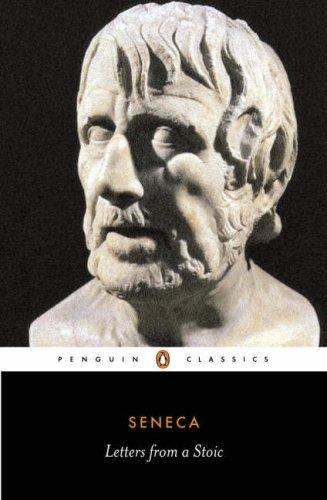
Letters from a Stoic
Seneca, translated by Robin Campbell
Seneca’s letters to his friend Lucilius on fear, time, friendship and death. Warm, practical and surprisingly modern.
Meditations
Marcus Aurelius, translated by Gregory Hays
The private notebook of a Roman emperor. Short entries you can open anywhere; the most readable modern translation.
As an Amazon Associate we earn from qualifying purchases. More picks on our Books page.
